
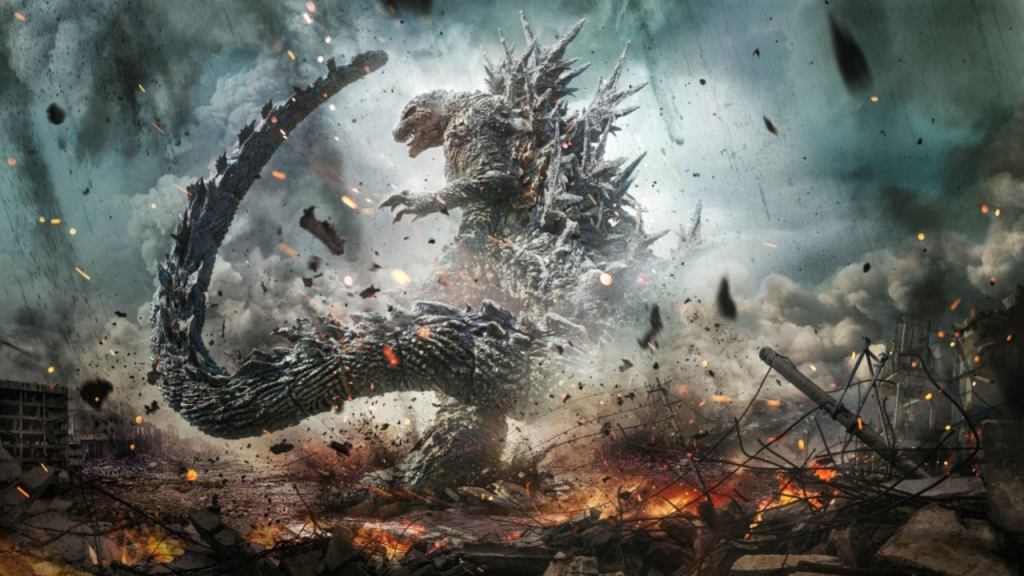
“Godzilla Minus One”, Toho
I’ve never really considered myself much of a Godzilla fan. I have, of course, always been aware of the cultural and historical importance of the iconic franchise, which has gone through phases of more politically introspective dramas, to low budget disposable entertainment, and most recently into an overblown high budget cinematic universe.
Yet despite my genuine interest in many of the themes and ideas at the core of the original franchise, I never actually took the time to watch many of the more iconic and lauded interpretations of the character. I am actually ashamed to admit that I’ve really only ever seen the American adaptations from 1998 and 2014; finding the former to be an incredibly silly and unoriginal knock off of better monster films and the latter a visually impressive yet largely forgettable experience. I do also have vague memories of starting to watch the original 1954 film on Netflix during my early teens, only to turn it off upon realizing it was the heavily altered American release, which edited out many of the original themes and commentary that attracted me to the franchise in the first place. With the latest American instalments seeming far more concerned with building an extensive, Avengers style lore and franchise rather than any memorable characters or themes, I’ve since, perhaps wisely, also skipped on these entries.
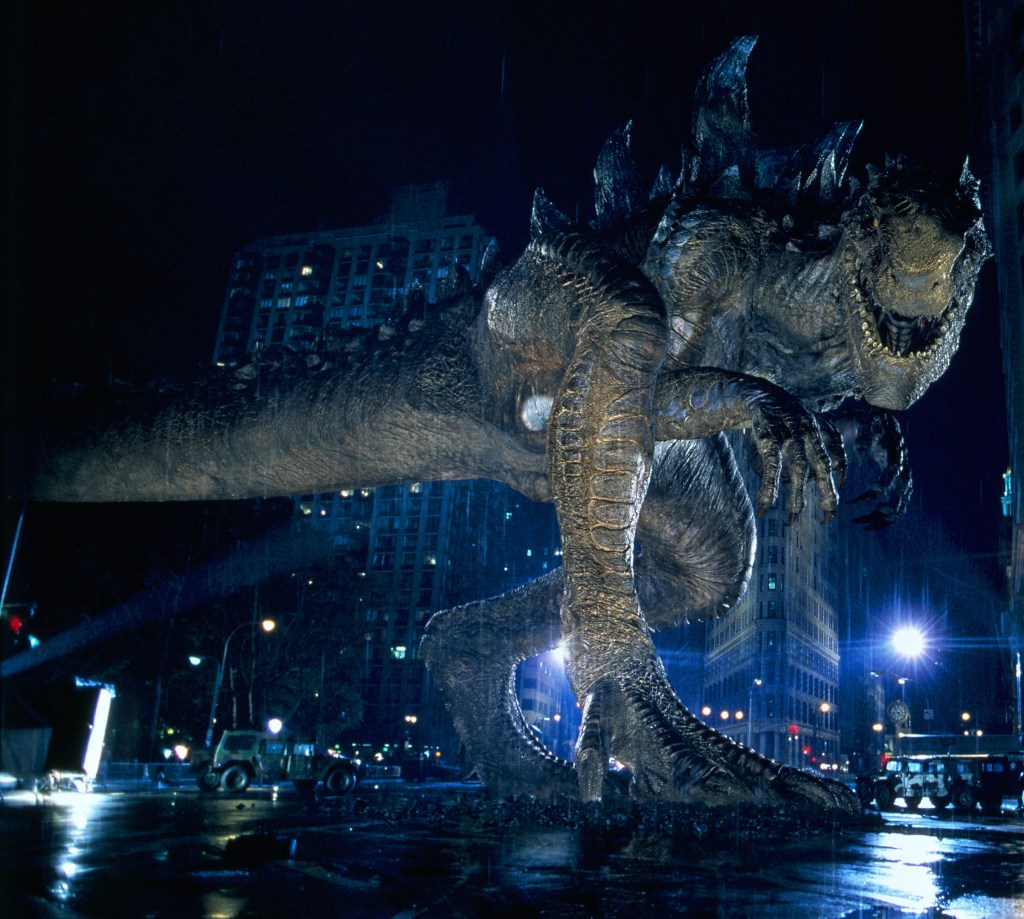
“Godzilla (1998):, Tristar
However, when I heard that Toho had released a new Godzilla movie which sought to explore the more nuanced and politically driven themes of the original film, I saw this as the perfect opportunity to reintroduce myself to the franchise and explore the many different and interesting aspects of this allegorical concept. Knowing the film was a more moderately budgeted project, my only expectations when walking into the cinema last night were to see a more nuanced and thematically conscient take than the recent American films had been able to offer.
What I found, however, was not only a film which excelled in telling a deeply layered, politically relevant, and profoundly emotional story, but one whose action and effects elicited far more anxiety and intensity than any recent 100-million-dollar blockbuster has been able to achieve.
Godzilla Minus One is everything I ever hoped a Godzilla movie could be, excelling both as a meditation of war, nuclear terror, and humanity and as an intense piece of horror spectacle that genuinely kept me at the edge of my seat throughout its runtime. Having been so overexposed to grand scale action and horror in recent years, never did I imagine that I would ever feel genuinely intimidated by such a known monster Godzilla, but last night I found myself tensing up against my seat as Godzilla moved across the screen. This Godzilla is a genuinely terrifying and menacing creature; a deeply impactful symbol of war whose presence serves not as pure spectacle but of true thematic importance and horror. The film utilizes Godzilla not as a blockbuster action figure but rather as it was originally conceived; a symbol of war and destruction, highlighting the sins of an apathetic government which uses its people as cannon fodder in geopolitical conflicts.
And while the budgetary limitations of this film are at times noticeable throughout certain key action sequences (most unfortunately prevalent during Godzilla’s first daytime attack on the mainland), once the film refocuses the action into more intimate and grounded perspectives grounded, the film is able to instill this true sense of desperation and anxiety that the creature of Godzilla was always meant to represent. Director Takashi Yamazaki works brilliantly within the budgetary limitations of the project, knowing exactly where to place the audience within the action to elicit the most impact and emotional weight; whether it be by losing you within the chaotic streets of Ginza or inside the cockpit of a small fighter plane. This focus of the action through the character’s eyes serves to anchor the large-scale action into a deeply human experience, observing the impact and consequence of war on individuals and real human communities.
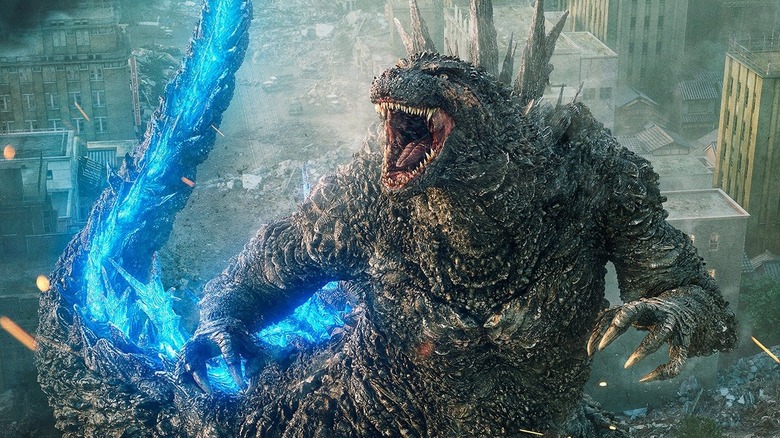
“Godzilla Minus One”, Toho
Following the life of a guilt-ridden Japanese Kamikaze pilot who survived WWII, the film examines complex and nuanced themes of what it truly means to live an honorable life, overcoming humanities self-destructive nature, and meditating -in a surprisingly graphic and visceral way- the horror of war and nuclear Armageddon upon individual lives. This emotional center to the film’s themes and arc elevates this story into its full potential, utilizing the fantastical mythology and world of Godzilla not as an excuse for expensive visuals and crossovers but rather as a terrifying reflection of the human condition.
In a generation of fantasy storytelling which seems to either take its source material far too seriously or revel in its ludicrous nature by mocking itself through meta commentary, Godzilla Minus stands out by fully embracing the fantastical nature of its world while simultaneously playing every dramatic beat with full emotional earnestness. No, the world and the visuals of Godzilla Minus One don’t always feel real to our world, but they feel real within this fantastical setting due to the emotional reality of the characters and their journeys. The character’s fear is real. Their regret is real. Their suffering is real. Their happiness and love are real. And it is played as such, regardless of the fantastical or unrealistic elements of the world.
Godzilla Minus One ticked off every box of what I want from this type of movie, and it makes me eager to explore more of this world and this franchise history through other similarly conscious and introspective past installments. If you are able to find a screening near you, please run to the theater to catch this one. Don’t wait for streaming.
 Enemy Unlocked